Blog details
Our stories dive deeper into construction trends, expert insights, and real-world project experience.
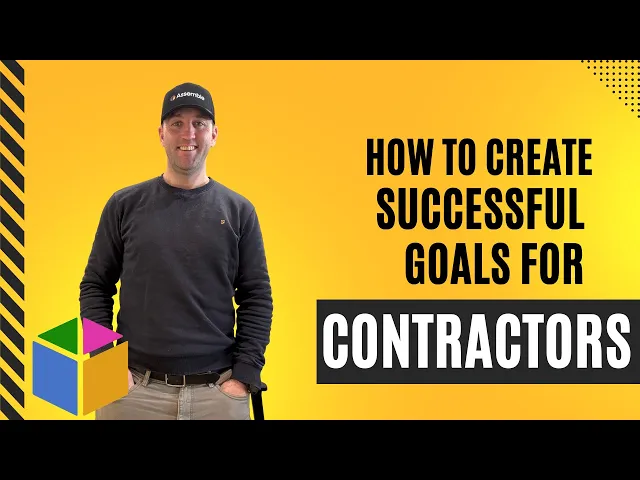
Goal Setting for Construction Contractors: How to Plan a More Profitable Year
Construction is unpredictable by nature. Material prices fluctuate, weather causes delays, and scope creep is a constant battle. Without clear goals, it’s easy to drift into a cycle of:
Taking on any job that comes in
Working long hours just to stay afloat
Feeling constantly busy but unsure if you’re actually progressing
Clear goals act as decision-making filters.
When an opportunity comes up, you can ask a simple question:
“Does this move me closer to my goals - yes or no?”
That clarity alone can transform how you run your business.
Why Most Construction Goals Fail
Most goals fail because they’re too vague.
Common examples:
“Make more money”
“Less stress”
“Get better jobs”
These aren’t goals — they’re wishes.
A good construction goal needs to be:
Specific
Measurable
Reviewable
For example:
❌ “Make more money”
✅ “Increase profit margin by 10% per job”
Now you have something you can track monthly and review objectively.
The 4 Goal Buckets Every Contractor Should Use
A simple way to structure goal setting is to divide everything into four buckets:
1. Financial Goals
These relate directly to money and profitability:
Annual turnover target
Profit margin per job
Cash flow stability
Reducing cost overruns
Example:
Increase average job profit margin from 12% to 18% over the next 12 months.
2. Operational Goals
These focus on how the business runs day to day:
Fewer delays and overruns
Less admin
Better estimating accuracy
More consistent workflows
Example:
Reduce estimating time per job by 50% using a digital takeoff system.
3. Personal Goals (Often Ignored)
Your business should support your life, not consume it:
Getting home earlier
Fewer weekends on admin
Less stress
More predictable workload
Example:
Finish work by 6pm at least four days per week.
4. Growth Goals
These define where the business is going:
Hiring an apprentice or carpenter
Moving into larger or more profitable jobs
Increasing quote win rate
Expanding into new types of work
Example:
Win one higher-margin job per month instead of multiple low-margin jobs.
Start With a Brain Dump (Then Refine)
Begin by writing everything down under the four buckets above. Don’t overthink it — get it all on the page.
Then refine:
What actually matters?
What’s realistic in the next 12 months?
What will move the needle most?
Aim to finish with 4–5 clear goals for the year.
Reverse Engineer Your Goals
Big goals feel overwhelming until you break them down.
Example:
Annual target: €1,000,000 turnover
Average job size: €200,000
Jobs needed per year: 5
Now work backwards:
How many quotes do you need to send?
What’s your current win rate?
Do you have the systems and capacity to deliver?
If you win 1 in 3 quotes and need 5 jobs, you need to submit around 15–20 solid estimates per year. Suddenly, the goal feels achievable.
Measure Monthly, Not Annually
Goals only work if you review them regularly.
Set aside 15 minutes once a month to ask:
Am I moving closer to my goals?
What worked this month?
What needs to change next month?
Once goals are written down, your brain starts working on them subconsciously. You’ll naturally look for opportunities that move you forward — whether that’s sending one more quote, improving your pricing, or tightening up your systems.
Why Estimating Systems Matter for Goal Setting
Accurate estimating is the foundation of profitable goals.
If your takeoffs are slow, inconsistent, or rushed:
You’ll underprice work
You’ll win the wrong jobs
Your profit goals become impossible
Using a structured estimating and takeoff system allows you to:
Price jobs consistently
Understand your margins
Improve win rates
Make better decisions faster
That’s where better systems lead to better outcomes.
Final Thoughts
You don’t need complicated spreadsheets or corporate planning sessions. You just need:
Clear goals
A simple structure
Regular review
Write them down. Review them monthly. Adjust as you go.
You’ll be surprised how much clarity and progress comes from that alone.
Want to Improve Your Estimating and Takeoffs?
Assemble Pro is built specifically for small to medium construction contractors who want faster takeoffs, cleaner estimates, and better control over profitability.
No long-term contracts. No bloated features.
Just practical tools designed by builders, for builders.
👉 Try Assemble Pro free at assemblepro.com
